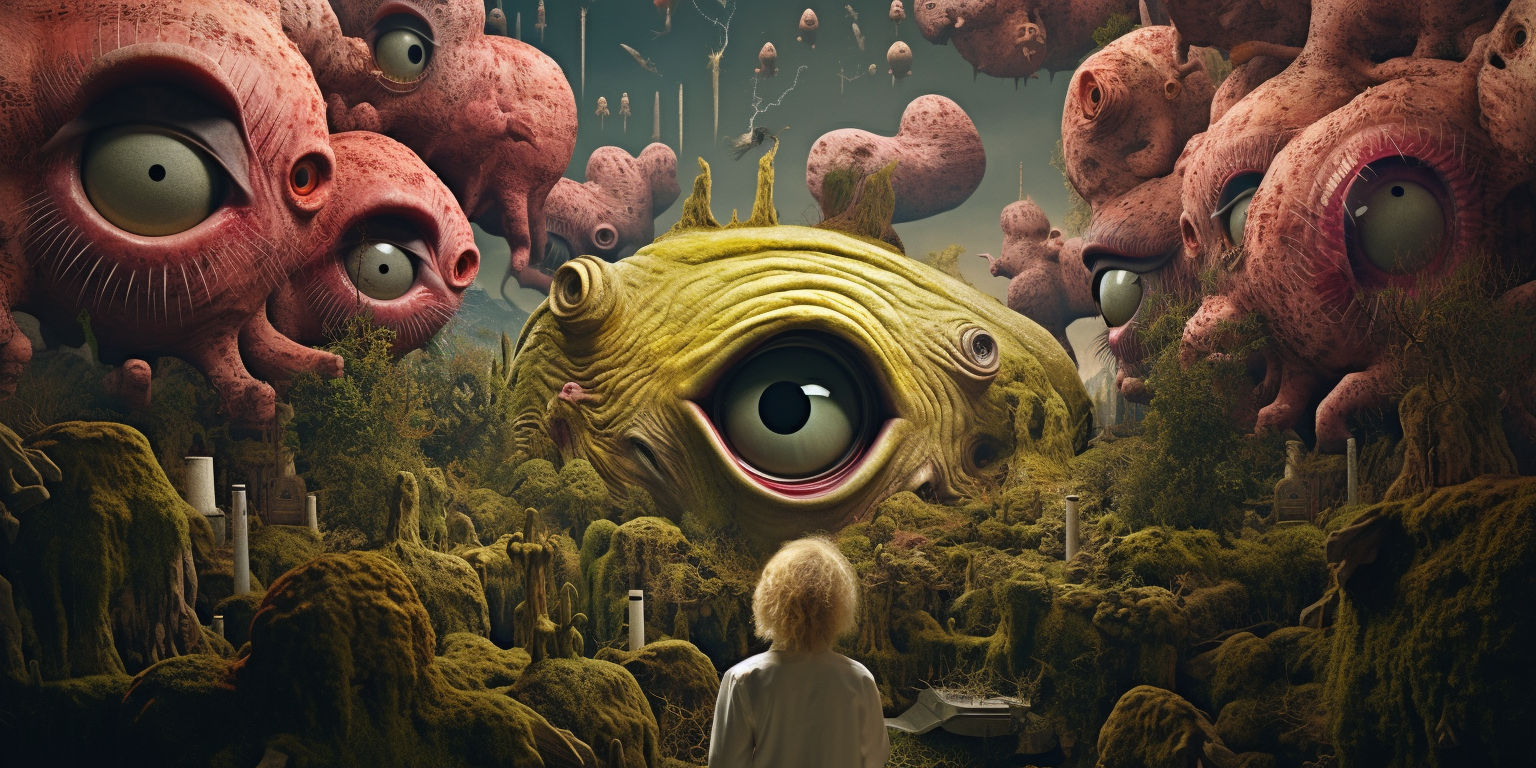
Weird Sound Effects: Strange, Creepy, Goofy, and Sci-Fi Sounds

Weird sound effects are strange, uncanny, comic, or unsettling audio cues that make an edit feel like it has slipped out of ordinary reality. They can be realistic sounds heard in the wrong place, like distant clapping in an empty hallway, or designed sounds that do not belong to the real world at all: reversed voices, warped metal, alien breaths, glitching radios, cartoon boings, wet squishes, impossible drones, and tiny digital oddities.
The useful question is not simply is this sound weird? It is what kind of weird does the scene need? A strange sound can make a viewer laugh, worry, lean forward, distrust a screen, feel a creature nearby, or understand that a character has entered a dream, memory, hallucination, game state, or supernatural space. When the supernatural cue should feel luminous rather than unsettling, angelic sound effects are often a better starting point.
The free +Sounds collection below includes royalty-free weird sound effects for odd digital stingers, cartoon warbles, bonks, creepy breaths, alien voices, rattles, reverse clicks, corrupted transmissions, bass pulses, monster movement, slime steps, and strange animal texture. Use them as ingredients. A convincing weird moment usually comes from contrast: one sound that feels familiar, one sound that feels wrong, and enough silence for the audience to notice the difference.
| Weird sound type | What it does | Good uses |
|---|---|---|
| Uncanny natural sounds | Makes the real world feel slightly wrong. | Night wildlife, distant hums, isolated claps, insects, wind, unexplained room tone. |
| Reversed or warped audio | Signals memory, dream logic, magic, possession, or time distortion. | Reverse swells, backmasked voices, warped metal, reversed UI clicks. |
| Sci-fi glitches | Makes technology feel unstable, alive, hacked, or contaminated. | Broken signals, corrupted transmissions, data readouts, screen transitions. |
| Creature and mouth sounds | Puts something biological near the listener. | Breaths, groans, alien syllables, squishes, slime, rattles, close vocal texture. |
| Cartoon weirdness | Turns an action into a joke or makes an ordinary beat absurd. | Boings, bonks, flexatone warbles, squeaks, exaggerated reactions. |
What makes a sound effect weird?
A weird sound effect usually breaks expectation. The sound may be unfamiliar, but it can also be familiar in the wrong context. A cat meow is ordinary until it appears under a spaceship door. A metal rattle is ordinary until it comes from inside a wall. A breath is ordinary until it is too close, too slow, or arrives before the character notices anything on screen.
Weirdness is often built from three ingredients: source confusion, timing, and contrast. Source confusion means the audience cannot immediately name what made the sound. Timing means the sound arrives a little earlier, later, shorter, or longer than expected. Contrast means the sound fights the image: a cheerful warble under a threatening gesture, a dry glitch in an organic scene, or a wet squish where the picture barely moves.
| Scene problem | Try this weird sound | Why it works |
|---|---|---|
| A room feels too normal | Distant hum, insect bed, warped room tone. | The space starts to feel active before the story explains why. |
| A screen or device feels flat | Glitch tick, corrupted burst, wonky UI alert. | The interface gains attitude and risk. |
| A joke is not landing | Small bonk, squeak, flexatone bend, record-like stutter. | The sound reframes the action as playful without needing dialogue. |
| A creature feels invisible | Breath, mouth click, groan, rattle, slime step. | The viewer senses body, distance, and threat. |
| A transition feels too clean | Reverse click, strange whoosh, short atonal pulse. | The cut becomes intentional, not just decorative. |
Nature's unusual sounds and mysterious noises
Some of the best weird sounds come directly from forests, oceans, streets, and skies. The night sounds of wildlife in Australia are a good reminder that natural ambience can be beautiful and unsettling at the same time.
A relaxing bed of chirping insects and birds becomes stranger when grunts, howls, screeches, and unidentified calls appear inside it. That is useful for editors: a scene does not need a monster sound to feel unsafe. Sometimes it only needs one natural sound that refuses to explain itself. For nearby palettes, see our scary sound effects and ambient sound effects.
Earth and space sounds are rich source material for strange audio ideas. The nonprofit site Earth.fm is useful for long natural ambience recordings. Urban mystery can work too: in 2022, New Yorkers reported a mysterious humming sound that became disturbing partly because nobody could identify where it was coming from.
The famous bloop sound from 1997 is another reminder that weirdness often comes from uncertainty. The sound was not huge or aggressive, but its unclear origin made people imagine sea monsters, secret machines, and deep ocean danger before scientific explanations settled around ice movement.
Scientists also create unusual audio by turning data into sound. NASA and Chandra's sonification work is not "space sound" in the ordinary air-vibration sense; it is data translated into pitch, rhythm, and texture. For editors, that distinction is useful. A sonified black hole, an electrical hum, and a synthetic drone can all suggest scale and danger, but each carries a different kind of truth.
Weird sci-fi sound effects
Sci-fi sound effects are a reliable place to study weirdness because they often have to sell technology the audience has never heard before. The sonic landscape of Star Trek feels familiar now, but many of those whirs, buzzes, crackles, doors, scanners, alarms, and flybys once had to teach the viewer what the future sounded like.
Listen to the timed flyby above: high-frequency whirring, electrical crackle, power movement, and Doppler motion all tell the viewer that the object is fast, advanced, and dangerous. The strange sound is not random. It is doing physics, emotion, and worldbuilding at once.
Flight of the Navigator uses a more abstract palette. The ship's quick-silver appearance is matched by bright, slippery upper-register sound that feels less mechanical and more impossible.
For your own edits, decide whether the weird sci-fi sound should explain the machine or make the machine mysterious. A clear UI click tells the audience a button worked. A corrupted transmission tells them the system is damaged. A reversed pulse tells them the system may not obey normal time. For more digital palettes, see glitch sound effects.
Japanese game shows, anime horror, and maximal weirdness
Japanese television, animation, game shows, and horror often use sound with a boldness that can be hard to match in quieter Western editing. A Human Tetris game-show clip, for example, layers success chimes, sirens, one-shot stabs, short bell tones, audience reaction, host commentary, and splash recordings almost on top of one another.
The lesson is not simply "add more sounds." It is that a dense soundscape can still be readable if each sound has a role: success, danger, impact, audience, host, splash, reset. That same principle applies to social videos, game UI, and comedy edits. Too many random sounds become clutter. Many specific sounds can become rhythm.
Horror from Japan often works in the opposite direction: silence, close wet Foley, reverb, awkward pauses, and small vocal details can make the image feel dissociated from normal time.
In the opening moments above, the unsettling quality comes from fragile vocal texture and wet body detail. The sound is not huge, but it is intimate. That is often the fastest way to make a weird sound feel serious: bring it close, remove the musical safety net, and let the texture sit in the room.
Weird sounds in games
Games use weird noises for feedback, threat, location, reward, and identity. A strange sound can tell the player that an enemy is nearby, that a spell is charging, that an interface has changed state, or that the world itself is unstable. Unlike film, games repeat sounds, so the weirdness has to survive repetition without becoming irritating.
The Dark Souls III clip above leans into uncomfortable body detail: breath, chattering, scrape, and movement against a low ambient bed. Compare that with Bloodborne, where groans, cracking textures, and wet creature detail sit against subtler environmental ambience.
If you are building weird sounds for games, make variations early. One perfect groan repeated twenty times becomes comic by accident. Use families of related sounds with small changes in pitch, length, start transient, and tail. Keep UI weirdness short and legible. Save the long evolving sounds for spaces, reveals, bosses, and transitions.
Goofy Ahh and meme sound effects
Some weird sounds are not scary or cinematic. They are funny because they feel badly behaved. The Goofy Ahh meme style uses exaggerated cartoon hits, squeaks, distorted laughs, boings, vocal fragments, awkward timing, and sudden edits to make ordinary clips feel absurd.
The important lesson is restraint. A goofy sound effect works best when it chooses a point of view. Is the edit mocking the action? Is the sound representing a character's panic? Is it punctuating a bad decision? If every cut gets a boing, no cut gets a joke. For a more focused comedy palette, see our goofy sound effects, cartoon sound effects, and pop sound effects.
How to choose weird sound effects
Start by naming the job. Weirdness is a flavor, not a purpose. A sound can be strange and still fail if it does not clarify the moment. Decide whether the sound should create dread, comedy, confusion, technology, creature presence, magic, impact, transition, or world texture.
- For dread: use quiet sounds with unclear sources, close breaths, distant rattles, low drones, and negative space.
- For comedy: use short sounds with fast timing: warbles, bonks, squeaks, tiny hits, pitch bends, and abrupt stops.
- For sci-fi: use glitches, data bursts, radio texture, reverse clicks, UI chirps, and synthetic pulses.
- For creatures: combine breath, mouth, throat, body movement, wet texture, and one identifying signature.
- For transitions: use reverse swells, strange whooshes, stutters, and small atonal tails that match the cut length.
Then test the sound against the picture at normal volume. Weird sounds are easy to over-mix because they are fun in isolation. If the sound makes the viewer notice the edit instead of the idea, pull it back, shorten it, or remove one layer.
Common weird sound mistakes
Avoid treating weirdness as a license to overuse random sounds. A strange cue works best when it has a clear job and a clear point of view.
- Using weird as a substitute for specific. A random odd sound is still random. Give it a job.
- Making every sound huge. Tiny weird sounds often feel more disturbing because the audience has to lean in.
- Ignoring the room. A close dry squish in a cathedral, bedroom, spaceship, and alley should not have the same tail.
- Repeating one joke. Comedy sounds need variation and timing, not just a favorite boing on every cut.
- Forgetting silence. The weirdest sound is sometimes the only sound after a long quiet space.
FAQ
What are weird sound effects?
Weird sound effects are strange, uncanny, comic, or unsettling audio cues used to make a scene feel unusual, surreal, funny, scary, futuristic, or unstable.
What makes a sound effect feel weird?
A sound feels weird when the audience cannot easily identify its source, when it appears in an unexpected context, or when its timing, pitch, texture, or reverb does not match the image in a normal way.
How do I use weird sounds without making an edit messy?
Name the job first: dread, comedy, technology, creature, transition, magic, or world texture. Use fewer layers, keep the timing intentional, and leave enough silence for the strange sound to register.
Can weird sound effects be royalty-free?
Yes. The +Sounds collection on this page is built for royalty-free use through Audio Design Desk. Always check your current +Sounds plan and usage rights for the exact license terms that apply to your project.